Stop all the Clocks
A Deep dive into the scientific mechanisms behind Autophagy and why it's essential to switch mTOR on and off to remain healthy and prevent inflammation and decease as well as slow the agening prosess.
ELLE LUMSDEN
4/24/20262 min read
The study of cellular survival and death revolves around the precise regulation of enzymes known as caspases. Caspase 8 is primarily recognized for its role in initiating apoptosis, which is a form of programmed cell death that occurs when a cell is no longer needed or is damaged beyond repair. However, recent scientific findings demonstrate that the most vital function of Caspase 8 is actually to prevent a more chaotic and inflammatory form of cell death called necroptosis. By maintaining its catalytic activity, Caspase 8 acts as a molecular gatekeeper that suppresses the proteins RIPK1 and RIPK3, which would otherwise trigger the rupture of the cell membrane and cause damage to surrounding tissues.
To understand how a cell chooses between survival and necrosis, researchers have looked for the specific molecules that Caspase 8 modifies to keep the cell alive. A key discovery is the protein CYLD, which serves as a critical substrate for Caspase 8. Under normal conditions, when the body releases signaling molecules like Tumor Necrosis Factor, Caspase 8 cleaves the CYLD protein at a specific site known as Asp 215. This cleavage prevents CYLD from accumulating and triggering a necrotic response. If this process fails, either through the loss of Caspase 8 or a mutation in CYLD that prevents it from being cut, the cell can no longer maintain its internal integrity and will undergo premature death.
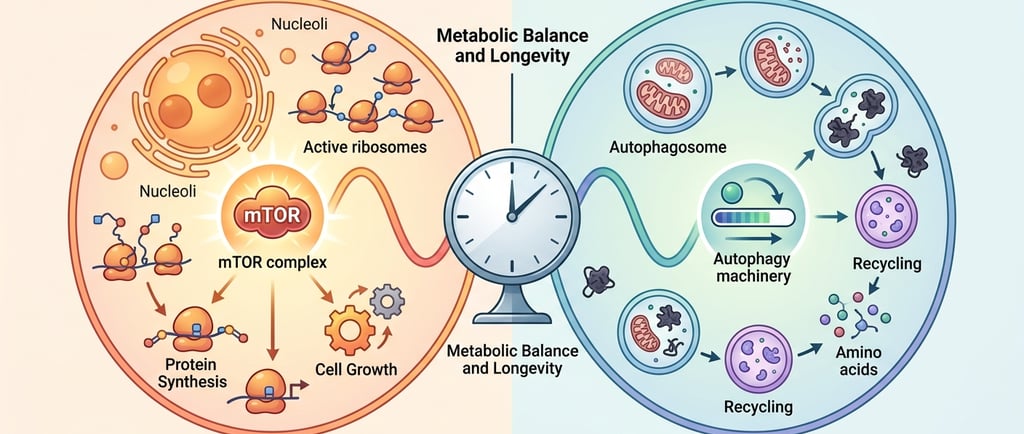
The relationship between these proteins is closely linked to the broader metabolic processes of the cell, such as autophagy and the regulation of the mTOR pathway. The mechanistic Target of Rapamycin, or mTOR, acts as a primary sensor for nutrient availability and protein synthesis. When nutrients are plentiful, mTOR is active and encourages cellular growth. However, constant growth without a period of cleaning leads to the accumulation of cellular waste and a reduction in the efficiency of pathways like the one managed by Caspase 8. To optimize cellular health, it is necessary to periodically suppress mTOR activity to allow for self-cleansing through autophagy.
Effective biological management involves a deliberate oscillation between these metabolic states. By utilizing periods of fasting, the body reduces insulin and nutrient signaling, which effectively turns off the mTOR pathway. This pause in growth triggers the cell to prioritize internal repair and the recycling of damaged components. When this is followed by the consumption of high-quality proteins, the mTOR pathway is re-engaged to build new, functional structures. This cycle of switching between repair and growth ensures that the molecular machinery, including the proteins that prevent necrosis, remains in peak condition and free from cumulative errors.
This rhythmic approach to nutrition directly combats the biological markers of aging and the onset of disease. When the body stays in a constant state of growth due to over-nutrition, the natural housekeeping processes slow down, and the risk of improper cell death signaling increases. By contrast, a disciplined cycle of fasting and protein intake creates a predictable internal environment. This allows the cell to manage its energy resources with extreme precision, ensuring that substrates like CYLD are processed correctly and that the survival signals remain dominant over the pathways of inflammation and decay.
The conclusion of this scientific model suggests that longevity is not achieved through a static state of health but through a dynamic process of metabolic flexibility. Mastering the timing of nutrient intake allows an individual to oversee their cellular chemistry at a high level. When we align our daily habits with the fundamental requirements of caspase regulation and nutrient sensing, we reduce the burden on our biology. This strategic intervention in the molecular life cycle provides a sustainable path toward maintaining the integrity of our physical systems and extending the healthy human life span.